
- News
Staying Safe in a Digital World
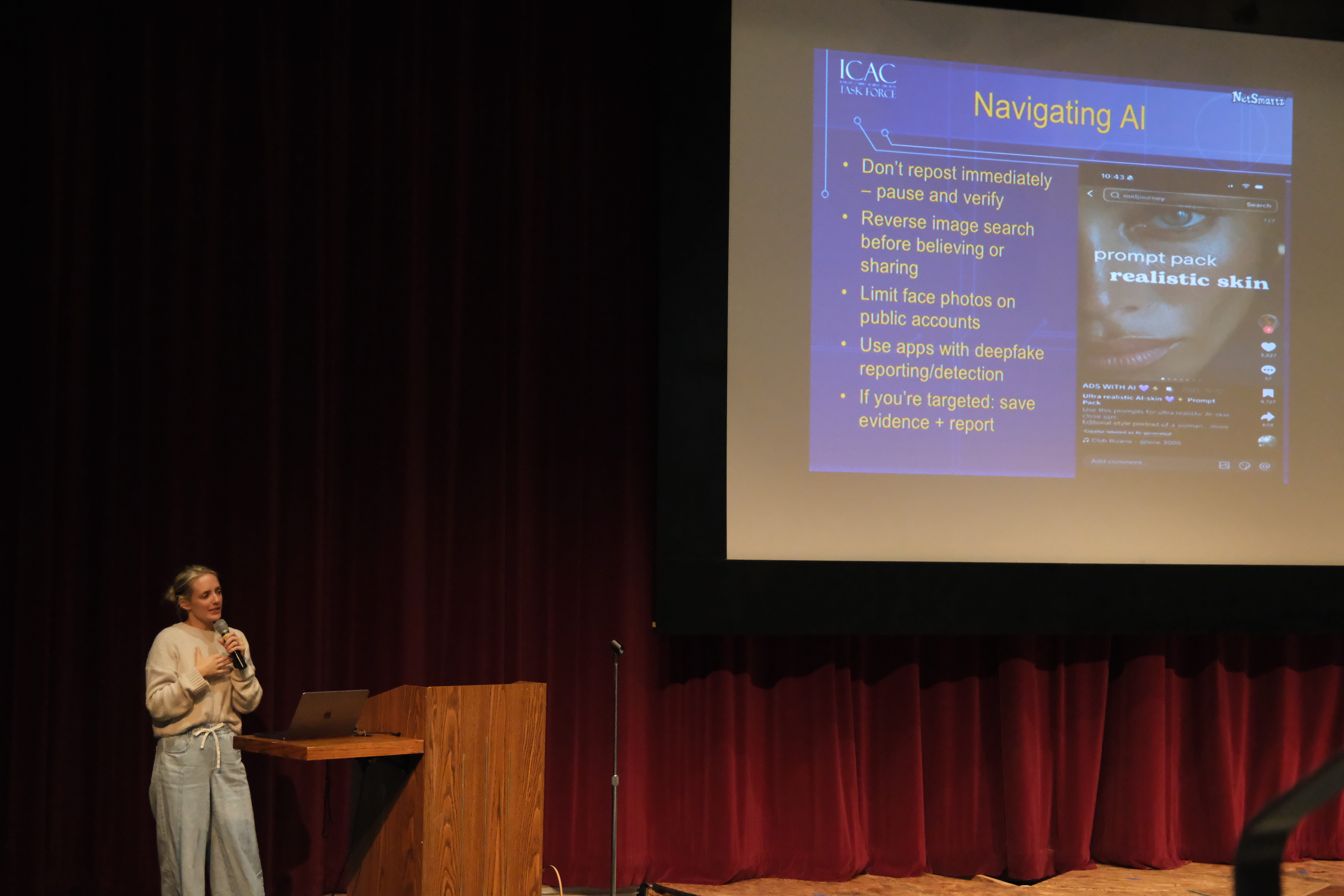
For the past 16 years, Stefanie Hanley, formerly of the FBI and Seattle Police Department, has been speaking to Overlake students about online safety. She herself has spent two decades working in the internet crimes space for law enforcement and has recently taken her skills to the private sector working for a major social media platform. When she first came to campus years ago, she was mostly talking about internet safety on MySpace. Now the ways students interact online are almost too many to count and the landscape continues to evolve.
Her goal as she says is not necessarily to get students off their devices entirely, but to consider that what they do online can have lasting consequences. When it comes to content online, even if you did not produce it, you are still connected to it if you like, comment, or reshare something that gets flagged. So often, it is easy to think that what we do or say online doesn’t matter, but the reality is that it does, and it can have lasting effects on our lives. That was a big part of Hanley’s message to students.
“The ten-second rule. Think about it for ten seconds before you post something,” she told students.
Some key points for online safety:
- Rule #1 of the internet: Nothing is private
- Think about how you approach a screen. Have the same standards online as you would in person
- Anonymous accounts are not truly anonymous. Every account, like, comment, etc. is retained by the platform, even if you delete it
- Every button you push on a device is throwing breadcrumbs behind you
- Private is better than public, but neither is truly private
- Unfollow/unfriend people you do not know in person
While much of her message was about the choices students make online, she also addressed the flip side: things that can happen to you online, such as cyberbullying, sexploitation, AI-generated blackmail content. The threats are more advanced than they were when Hanley first started her career, and AI-generated attacks are more common than they used to be.
Hanley aimed to help students understand what to look for and what to do if someone approaches them and tries to exploit them or blackmail them into sending money or inappropriate pictures. In those situations, they should block the account, never respond, never send money, and tell a trusted adult or law enforcement. She emphasized that no matter what, law enforcement is there to help. Even if something happens and you get in over your head, they are there to help.
Internet safety is a continuing and important conversation to have with your child. Our counseling team has put together a collection of resources to help. If you or your student has questions or concerns about something online, reach out to our counseling department for support.